
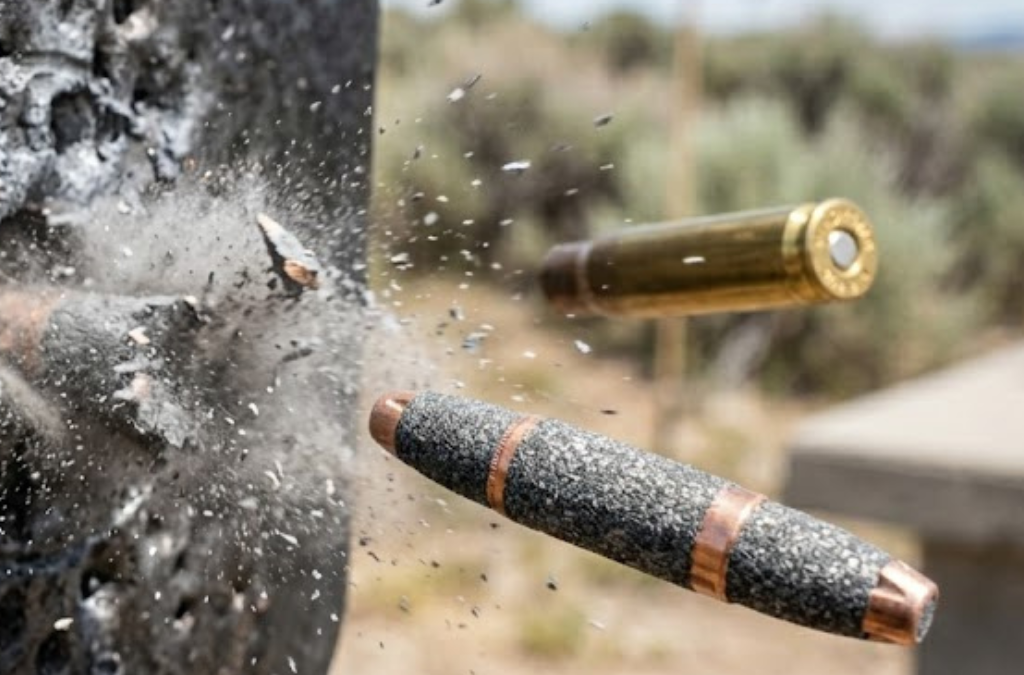
If you’ve ever shopped for ammo and seen the word “frangible” on the box without knowing exactly what it means, you’re not alone. A lot of shooters skip past it. But if you train at an indoor range, shoot steel targets, or do any kind of close-quarters practice, knowing the answer to, “what is frangible ammo” is helpful.
At Maui Ammo and Gun Supply, we stock a range of ammunition types and get questions about frangible rounds fairly often. Here’s a plain-language breakdown of what frangible ammo is, how it works, and whether it fits your shooting needs.
Frangible Ammo Defined: What Is Frangible Ammo Made Of
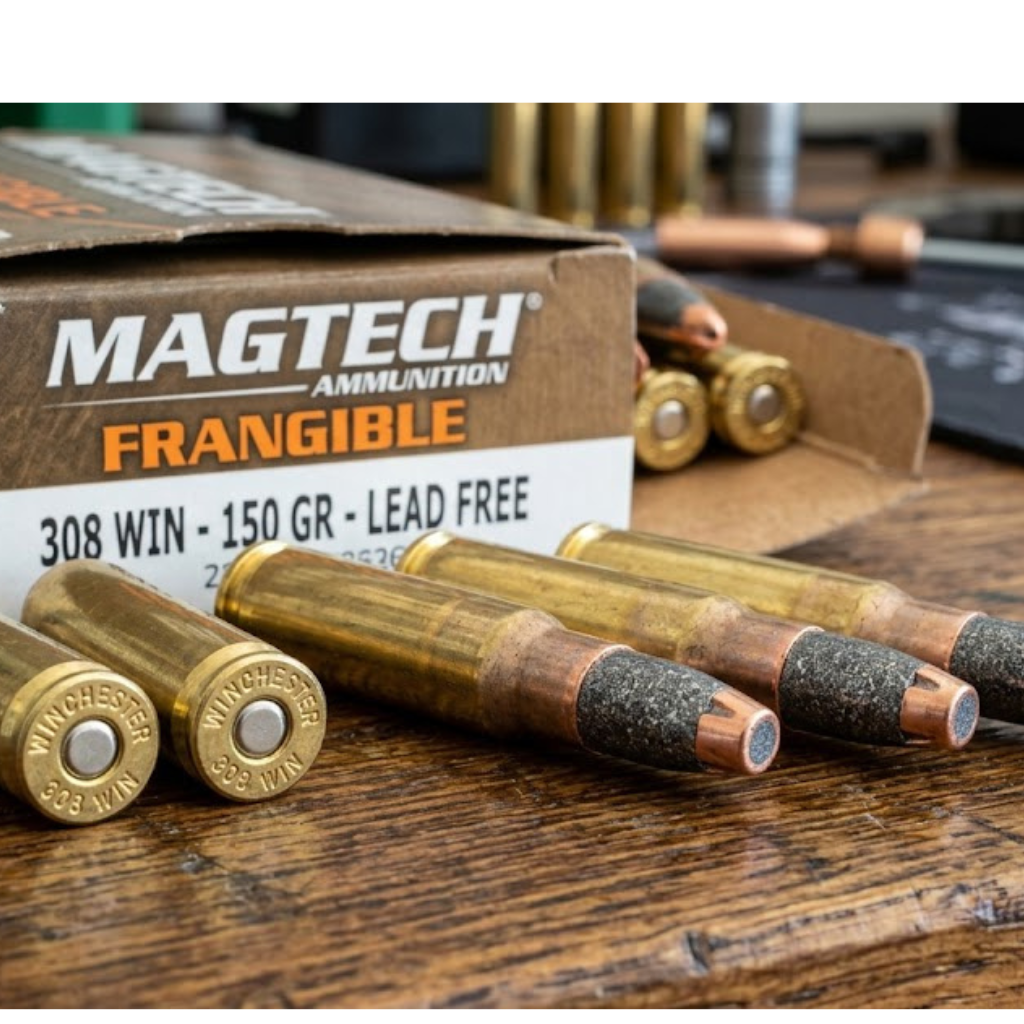
Frangible ammo refers to bullets made from compressed powdered metals, most commonly copper and tin, pressed together using a binding agent. Unlike traditional lead-core bullets, frangible rounds are not cast from solid metal. They’re formed under high pressure into a bullet shape that holds together through the firing process but breaks apart on hard impact.
That’s the core idea. The bullet stays intact in the barrel, flies true through the air, and then disintegrates into fine metal particles the moment it strikes a surface harder than itself, like a steel plate, concrete wall, or brick.
Most frangible rounds are also lead-free, which matters for indoor range environments where lead exposure from traditional bullets can accumulate over time.
How Frangible Bullets Differ From FMJ and Hollow Point Rounds
Full metal jacket rounds (FMJ) use a solid lead core wrapped in a copper jacket. They’re built to stay intact through a target and keep moving. That’s useful in some scenarios but creates ricochet and over-penetration risks in others.
Hollow point rounds are designed to expand on impact with soft tissue. They slow down inside the target, which helps prevent the bullet from passing through walls or barriers behind it. But they still hold together as a single projectile.
Frangible bullets take a different approach. Instead of expanding or staying solid, they shatter. That disintegration is the entire point, and it changes how they perform across every scenario you might use them in.
How Frangible Ammo Works on Impact
The disintegration happens because of the surface the bullet strikes, not just the bullet’s design. When a frangible round hits something harder than itself, such as a steel target or a masonry surface, the energy at the point of impact exceeds what the compressed metal composite can withstand. The bullet powders. It turns into a cloud of fine particles that lose velocity almost immediately.
That’s why frangible rounds reduce ricochet so effectively. There’s no intact bullet to bounce back toward the shooter or into an adjacent lane.
Soft targets behave differently. Frangible bullets don’t always disintegrate inside tissue the same way they do on steel. The bullet may fragment partially, or it may pass through without fully breaking apart, depending on velocity, distance, and the specific round’s construction. That performance difference is important when you evaluate frangible ammo for self-defense purposes.
What Frangible Ammo Is Used For
When it comes to what is frangible ammo used for, the clearest use case is range training. Frangible ammo is the preferred choice for indoor shooting ranges, close-quarters shoot houses, and any scenario where you’re firing at steel targets at shorter distances.
Law enforcement and military units have used frangible rounds in training since the 1970s. The reason is straightforward. When you’re running live-fire drills in tight quarters, you need a round that won’t ricochet back toward the shooter or a teammate. Frangible ammunition solves that problem reliably.
Frangible rounds also see use in specialized environments where a bullet that passes through a wall could cause serious damage. Think aircraft, oil platforms, chemical plants, or nuclear facilities. In those settings, standard FMJ ammo carries risks that frangible rounds don’t.
For civilian shooters, the biggest benefit is steel target use. You can shoot at shorter distances with steel plates without worrying about dangerous splash-back. And if you train frequently, switching to frangible rounds also reduces your lead exposure over time.
The Pros and Cons of Frangible Ammunition
Now that you know what is frangible ammo, it’s time to discuss its advantages (and disadvantages). Frangible ammo has real advantages. It’s lead-free, which makes it cleaner for enclosed range environments. It reduces ricochet risk on steel targets. It lowers the chance of over-penetration in tight spaces. And it allows you to train at closer distances safely.
On the downside, frangible rounds cost more than standard FMJ ammo. They also produce more barrel fouling over time because the softer compressed metal leaves more residue. You’ll need to clean your firearm more frequently if you run frangible rounds for high-volume training.
Point of impact can shift as well. Because frangible bullets are lighter than equivalent lead-core rounds, they may hit to a different spot on target than your regular training or carry ammo. That’s worth checking at the range before you rely on them.
The deeper limitation is penetration. Frangible rounds don’t punch through barriers the way FMJ rounds do. If a self-defense scenario involves an attacker behind cover, that matters. It’s not a dealbreaker for training use, but it’s a consideration for carry.
Where to Find Frangible Ammo in Maui
We carry a selection of ammunition at Maui Ammo and Gun Supply, and our staff can walk you through what’s in stock and what fits your firearm and training goals. Whether you’re looking for frangible rounds for range use, steel target practice, or want to evaluate your home defense options, we’re here to help.
We’re also opening Maui’s premier indoor shooting range, where frangible ammo will be especially relevant. An indoor range environment is exactly where these rounds perform at their best, and we want you to train safely.
Stop by the store or give us a call. We’ve been serving Maui’s firearms community since 2000, and helping you find the right ammo for the right situation is exactly what we do.
Recent Comments